Skip to main content Skip to main navigation
www.qld.gov.au Delivering for Queensland - Queensland Government
Contact us
Queensland Government
Environment
Popular
  • Snakes near you
  • Koalas
  • Current environmental authority applications
Key services
  • Online services
  • Have your say
  • Licences and permits
Menu
  • Home
  • Wildlife and ecosystems
    • Wildlife and ecosystems
    • Animals
    • Plants
    • Threatened species
    • Biodiversity
    • Community role
    • Rainforests
    • Regional ecosystems
    • Wetlands
  • Licences and permits
    • Licences and permits
    • Apply, renew or register using Online Services
    • Coastal development
    • Contaminated land
    • Development application process
    • Environmentally relevant activities
    • Heritage places
    • Plants and animals
    • Waste management for business
  • Management and regulation
    • Management and regulation
    • Declared emergency and natural disaster information
    • Compliance and enforcement
    • Environmentally relevant activities
    • Environmental policy and legislation
    • Planning and guidelines
    • Air quality
    • Contaminated land
    • Monitoring
    • Waste
    • Water quality and ecosystem health
    • World heritage areas
  • Our environment
    • Our environment
    • Air
    • Climate
    • Coasts
    • Great Barrier Reef
    • Heritage
    • Land contamination
    • Native vegetation
    • Noise and odour
    • Circular economy and waste reduction
    • Water
    • Wildlife and ecosystems
    • World heritage areas
  • Community
    • Community
    • Grants and funding programs
    • Air monitoring programs and investigations
    • Public notices and consultations
    • Queensland Regulation Insider
    • Coal seam gas information for community and landholders
    • Community issues
  1. Home
  2. Management and regulation
  3. World heritage areas
  4. Queensland’s World Heritage areas
  5. Wet Tropics
  6. Wet Tropics parks

Queensland’s World Heritage areas

  • Australian Fossil Mammal Site – Riversleigh section
  • Great Barrier Reef
  • Gondwana Rainforests of Australia
  • K’gari
  • Wet Tropics

Wet Tropics parks

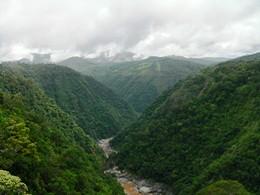
Photo of Barron Gorge National Park.

Barron Gorge National Park

© Tamara Vallance
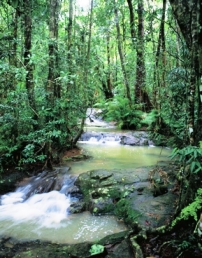
Photo of Tully Gorge National Park.

Tully Gorge National Park

© Tourism Queensland

More than 87% of the Wet Tropics of Queensland World Heritage Area is protected as national parks, conservation parks, state forests and forest reserves.

These are some of the more popular protected areas:

  • Barron Gorge National Park
  • Kalkajaka National Park (CYPAL)
  • Clump Mountain National Park
  • Crater Lakes National Park
  • Curtain Fig National Park
  • Daintree National Park (CYPAL)
  • Danbulla National Park
  • Dinden National Park
  • Djiru National Park
  • Girramay National Park
  • Girringun National Park
  • Herberton Range Conservation Park
  • Koombooloomba National Park and Koombooloomba Conservation Park
  • Kuranda National Park and Mowbray National Park
  • Kirrama National Park
  • Kurrimine Beach National Park
  • Macalister Range National Park
  • Mount Hypipamee National Park
  • Mount Lewis National Park
  • Paluma Range National Park
  • Russell River National Park
  • Tully Falls National Park
  • Tully Gorge National Park
  • Wooroonooran National Park
Last reviewed:
8 July 2026
Last updated:
2 May 2024

Environment

Department of the Environment, Tourism, Science and Innovation

Contact us

Get in touch for enquiries, feedback, complaints and compliments.

Phone: 13 QGOV (13 74 68)
Contact us

Website feedback

Help us improve the content on our website or tell us what is working well.

Leave your feedback

  • Help
  • Copyright
  • Disclaimer
  • Privacy
  • Right to information
  • Accessibility
  • Jobs in Queensland Government
  • Other languages

Follow us

QldEnvironment Facebook
QldEnvironment Instagram
LinkedIn

Cultural acknowledgement

The Department of the Environment, Tourism, Science and Innovation acknowledges Aboriginal peoples and Torres Strait Islander peoples as the Traditional Owners and custodians of the land. We recognise their connection to land, sea and community, and pay our respects to Elders past and present.

© The State of Queensland (Department of the Environment, Tourism, Science and Innovation) 2017–2026

Queensland Government