Compliance and enforcement
As Queensland’s environmental regulator, we:
- regulate industries and hold polluters to account to make sure they meet their environmental obligations and community expectations
- manage and monitor environmental performance through a range of assessment, compliance, investigation, enforcement and education activities
- enforce environmental and heritage protection laws to prevent pollution and safeguard our communities, lifestyle and unique environment.
To help build a culture of improved voluntary compliance within industry and improve compliance practices, we publish guidance material and supporting information to help industry understand how to meet their environmental obligations and achieve good environmental practices.
Our work is primarily governed by the Environmental Protection Act 1994, the Waste Reduction and Recycling Act 2011 and the Coastal Protection and Management Act 1995.
Compliance operations
We undertake compliance programs and proactive inspections to monitor environmental performance. Where poor performance or non-compliance is detected, we will take appropriate and proportionate compliance action, which can range from education to enforcement.
People or operators who choose not to comply with their obligations should expect prompt and strong enforcement action. Where enforcement is required, we will use statutory notices to address environmental harm and will apply penalties to punish environmental crime.
Compliance programs are conducted in four key streams:
- Proactive Inspection Program
- Responsive Compliance Program
- Enduring Compliance Programs
- Focused Compliance Programs.
Proactive Inspection Program
We undertake proactive inspections to monitor the environmental performance of environmental authority holders. Our local Compliance Centres prioritise inspections to direct resources towards operators that pose the most risk.
Inspections do not always identify non-compliance as many operators do the right thing by meeting their environmental obligations; however, where non-compliance is detected, we will apply an appropriate and proportionate enforcement response.
Responsive Compliance Program
We respond to notifications of alleged or potential non-compliance and environmental incidents. Our team assesses all notifications and prioritises them to determine the most appropriate response. Notifications are received from different types of sources, including community members, other government agencies, industry bodies and operators.
Response to these notifications is proportionate, with some managed administratively, while others are referred to local Compliance Centres for action. Notifications of major pollution events may also be escalated to our 24/7 incident response capability.
Enduring Compliance Programs
Our long-term compliance programs target significant risks to the environment and the community.
Reef Compliance Program
We are part of a united effort to protect and preserve the World Heritage-listed Great Barrier Reef (GBR).
Our work with producers helps improve water quality by reducing land-based water pollution flowing to the GBR – one of the major threats to this unique ecosystem.
We are on the ground working with sugarcane, banana and beef cattle grazing producers, and those involved in new or expanded commercial horticulture and cropping activities, to identify the improvements needed and support the transition to better practices that comply with the Reef protection regulations.
Our work ensures that practices are implemented and maintained to minimise sediment and nutrient loss from properties to waterways. This includes practices to monitor and maintain ground cover in the grazing industry, and practices to only apply fertiliser in accordance with good agronomic principles for the sugarcane and banana industries.
We also support producers by providing information for them to connect to a network of experts, programs, information, funding and grants to help them implement practices which support farm sustainability, productivity and profitability, whilst also reducing impacts on GBR catchment water quality.
Waste Compliance Program
Poor waste management practices can result in environmental harm as well as have a significant impact on communities, particularly in the form of odour issues. Additionally, waste levy avoidance and fraudulent activities can incentivise waste crime and undermine the waste levy framework.
As a result of these risks, we have dedicated resources that detect waste management and levy offences. Activities include inspections at licensed waste facilities, transaction audits and conducting volumetric surveys of waste stockpiles. Community reports to our Pollution Hotline also play an important role in identifying issues and trends.
Unlicensed Waste Program
The Unlicensed Waste Program targets operators who undertake waste management environmentally relevant activities without a current environmental authority. Inspections of these unregulated activities have revealed poor environmental practices and inadequate implementation of risk controls.
This program includes dedicated resources to identify unlicensed operators and utilise appropriate enforcement tools to prevent further non-compliance and disincentivise others from adopting a similar practice.
High Risk Weather Season Preparedness Program
Queensland experiences significant weather events from October to April each year. Some industries regulated under environmental authorities, such as large mines, quarries and waste facilities pose a risk to the environment and communities if operators do not take precautionary measures to prepare for significant weather events.
We undertake compliance-related communication, education, engagement and field inspections within the resource sector and other high-risk operators to ensure that appropriate precautionary measures are taken.
Focused Compliance Programs
In addition to responding to notifications and delivering our enduring programs, we also conduct Focused Compliance Programs, which are designed to address a specific issue or emerging risk associated with an activity or across a geographic area or industry sector. While it may take considerable time to deal with the issue, these programs are generally time-bound and resourced accordingly.
Swanbank Compliance Program
We have a dedicated team delivering an intensive compliance program in response to the significant community reports of odour nuisance near industrial areas at Swanbank and New Chum. Read more about the Swanbank program.
Completed Focused Compliance Programs include:
 Open larger image
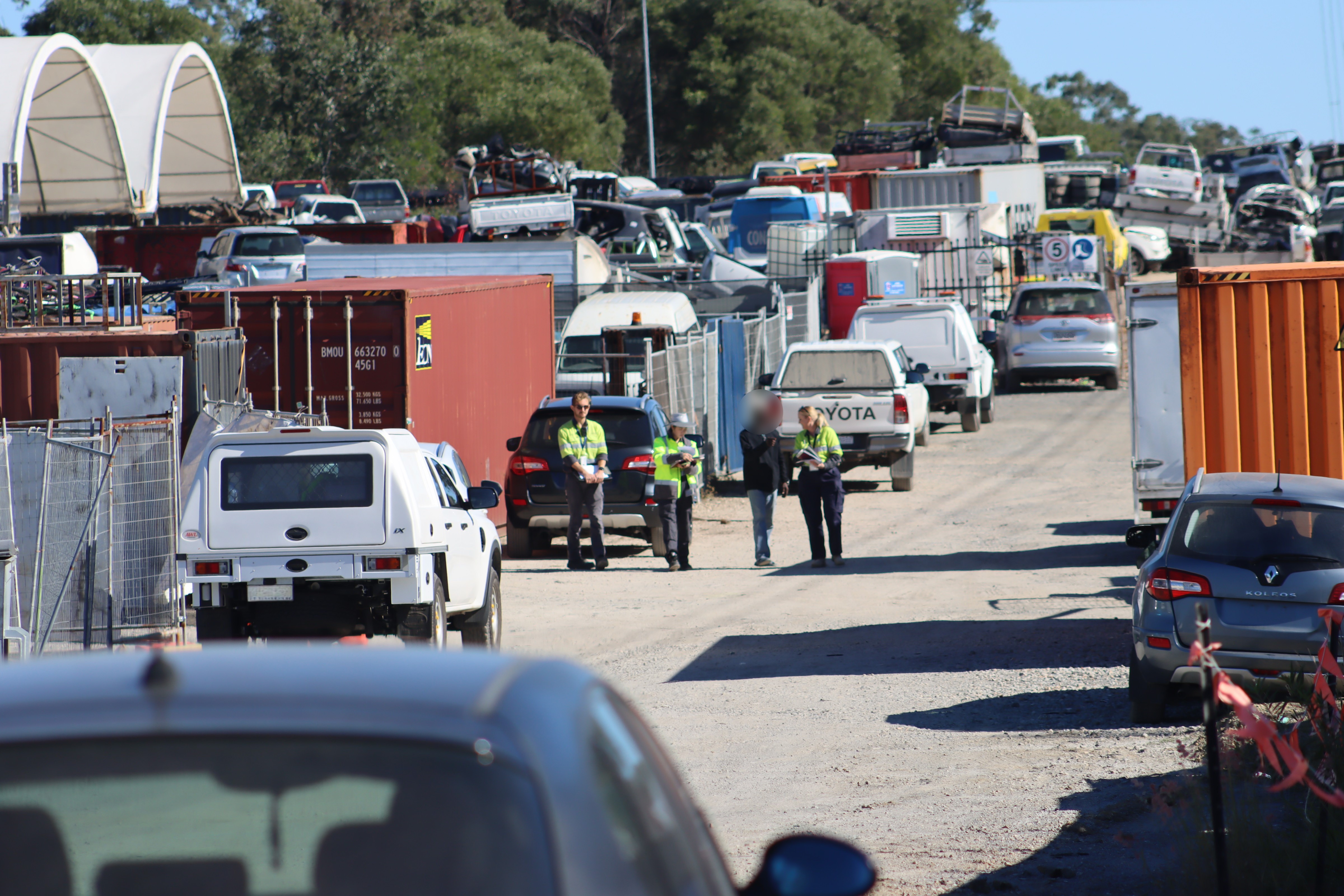
Operation Panther
© Queensland GovernmentOperation Panther
Operation Panther was a compliance operation targeting alleged illegal waste activity through the simultaneous execution of search warrants and inspection of 10 different waste sites on a two-kilometre parcel of land in Forest Lake, just outside Brisbane.
The compliance activity was the result of information that several operators were allegedly receiving and storing scrap metal and construction waste, including asbestos, used and broken solar panels and end-of-life tyres without an environmental authority.
The inspections assessed environmental risks, identified alleged offences and collected evidence, with enforcement action being taken where appropriate.
Compliance reporting
We report on compliance through Annual Reports under the relevant legislation administered, tabled in the Queensland Parliament.
The department has previously published annual strategic compliance priorities; however, the more dynamic approach outlined in the above programs has been adopted from the 2024/2025 financial year.
Previous Annual Strategic Compliance Priorities can be viewed at:
- Annual strategic compliance priorities 2020–2021
- Annual strategic compliance priorities 2020–2021: Final Report
- Annual strategic compliance priorities 2021–2022
- Annual strategic compliance priorities 2021–2022: Final Report
- Annual strategic compliance priorities 2022–2023
- Annual strategic compliance priorities 2022–2023: Final Report
Compliance activity
We undertake significant compliance activity each year. During the 2025/2026 financial year, we:
- had almost 16,000 community reports through the Pollution Hotline
- conducted more than 1,800 site inspections
- undertook more than 150 enforcement actions, which included cancellation of an environmental authority, cancellation of a suitable operator registration, environmental enforcement orders, enforceable undertakings, environmental evaluations and transitional environmental programs
- issued more than 160 penalty infringement notices (not including litter and illegal dumping fines)
- completed 18 prosecutions, all successful.
Enforcement action
We have set clear expectations about acceptable standards of environmental performance and we will take prompt, strong enforcement action against operators who choose not to comply with their obligations.
These expectations are set out in our administered legislation, related regulations and Enforcement guidelines.
Enforcement guidelines
We have published Enforcement guidelines to govern how we make decisions about appropriate enforcement action. The guidelines ensure our enforcement responses:
- reinforce legal obligations under the legislation
- achieve outcomes consistent with legislation
- deter non-compliant behaviour
- apply proportionate enforcement action.
Enforcement response
Where non-compliance has been detected, we may apply one or more enforcement tools. These tools include:
- Warning: An educative approach with no fine that describes the offence and is generally applied where there is low culpability or minor impacts.
- Statutory notice: A notice that requires the operator to take specified actions to cease activities and remediate harm.
- Penalty Infringement Notice (PIN): A monetary fine issued for a Penalty Infringement Notice offence, generally where the impacts are minor.
- Prosecution: Criminal proceedings for more severe offences, heard in the Magistrates Court or, for indictable matters, in the District Court.
- Court Order: Civil proceedings following a conviction, heard in the relevant court, where the department seeks a court order requiring the operator to take particular action.
For more information about compliance tools that are used by the department visit Compliance guidelines.
Powers of authorised officers
Our officers are authorised persons under our administered legislation, including the Environmental Protection Act 1994. Our officers exercise statutory powers to enable inspections, collect evidence and where appropriate, issue requirements to manage environmental risks.
The Powers of authorised persons guideline (ESR/2016/2276) provides an overview of the roles, powers and activities of the department’s authorised officers under the Environmental Protection Act 1994.
The Overt and Covert recording fact sheet (ESR/2023/6387) provides an overview of when departmental officers will use recording devices.
Stay informed, get involved
We undertake a range of community and industry communication, engagement and education activities.
Our Environmental Regulatory Update is a regular newsletter emailed to regulated operators and other interested subscribers such as environmental organisations and community members. The newsletter provides the latest information about important compliance and enforcement information.
Subscribe to receive future editions of the Environmental Regulatory Update newsletter.
Subscribe – we also issue the Swanbank and New Chum odour updates newsletter to keep community members informed about our compliance and enforcement work in the Ipswich area. Visit our community information and subscribe to the newsletter.
Learn – you can also learn about our work through our department’s social media profiles on Facebook, Instagram, Twitter, YouTube and LinkedIn and our other News and media channels, including media releases.
Participate – you can stay informed and participate in consultation activities by visiting our Public notices and consultations webpage.
Report pollution – our Pollution Hotline is a vital element of our compliance and enforcement activities. Community reports help identify localised issues and trends.
Report littering and illegal dumping – see it, report it, stop it – if you see someone littering or illegally dumping waste, you can report it by using our Littering and illegal dumping form.